
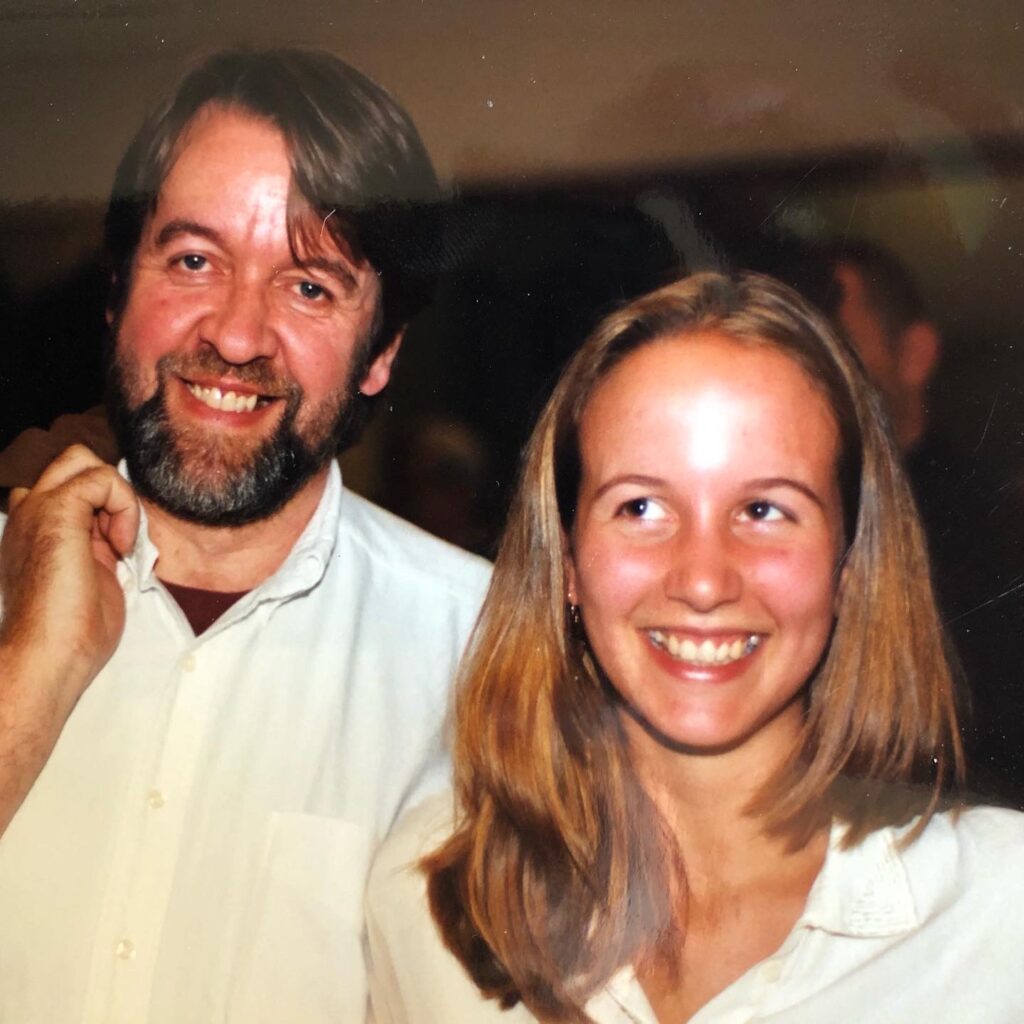
 This week I was interviewed by a journalist and asked about the process of writing Sins of My Father, and it gave me a chance to reflect on the journey of its evolution, when it started, how and what it then grew into and how in some ways it grew out of various stages in my own process of overcoming grief of the loss of my father.
My father had been the subject of my novel, Shadowing the Sun (2007), and I wasn’t keen to write about him again, even though he’d been following me for much of my life, and kept popping his head up into my fiction. But my PhD supervisor, Julia Bell, was keen that I attack his story and my relationship with him in a more direct way, through the form of creative nonfiction. Soon after I started the PhD, my husband and I decided to separate, and my steady life was thrown off course. But something came alive in my writing, and I was suddenly compelled to write down defining moments from my past, which, looking back now, I can recognise was my way of trying to understand what felt a shocking disruption at the time, but had in fact been brewing for much of my life.
One of these moments was the week my brother and I spent in California caring for my father when he was in full blown alcoholism. We had rushed to the States to try to get him into rehab after he had thrown himself down the stairs and broken a vertebra in his neck (this happened to coincide with my honeymoon). I had held onto the trauma of that week and had not until this time found a language for it. The writing spilled out of me one afternoon at home. Within an hour I had the bare bones of an essay, from start to finish, and over the next few weeks I had a finished draft. This first piece was published by Granta, in October 2016, ‘The Fog and The Sea’.
From then on, I followed my instinct and listened to the sentences that visited me at odd times, or the rush of recollection that forced me to stop and listen, and I gave myself the gift of writing time when these images or feelings persisted. It was like a compulsion at first. I had to sit down and follow a thought, and it often ended in an outpouring of emotion that was painful – sometimes making me cry – but also cathartic in that the feeling was dispelled after I dug into it, and I had the joy then of honing what I had written into something crafted and beautiful.
Research conducted by James W Pannebaker, and his associate Sandra Beall, suggests that writing about painful experience for 15 to 20 minutes for three or four days in a row will have a positive effect on physical and mental health, more so than when writing about emotionally neutral subjects. Students in their trial group engaged with free writing, not concerned with grammar or spelling, but more with touching deep emotion connected to a particular event, and then reflecting on what that event means to them now.
Before writing, all the students visited the health centre at a similar rate, but after the trial, visits from those students who had written only about superficial topics, or only about traumatic events without describing the emotions associated with those events were roughly unchanged. Those students who wrote about both what happened and how they felt about it, visited the health centre up to 50% less than they had before the trial. What Pannebaker and Beall discovered was that ‘to significantly improve your spirits long term, you must endure difficult feelings initially.’ But also that ‘to improve health, we must write detailed accounts, linking feelings with events.’
Pannebaker’s findings have their roots in expressive writing for health, and not in crafting that writing for publication, but what I discovered through my own practice was that having followed this pressing compulsion to commit a strong emotion or event to the page, I then had further revelations about how these events might be continuing to effect my life, and by following these revelations I began to move more confidently and consciously through the emotional and physical disruption that had followed my separation. Audre Lorde, in her Cancer Journals, writes of the importance of the ‘considered life’ which, according to her, grows and deepens as one approaches death. ‘Self scrutiny and an evaluation of our lives, while painful, can be rewarding and strengthening journeys towards a deeper self.’ And this self-scrutiny and willingness to be wholly present in the good and bad aspects of myself and my life, in all its painful honesty, made my writing more faceted and interesting.
Essayist, Carol Bly writes about a technique called ‘empathetic inquiry’. ‘Each of us must ask our own mind, “what else are you feeling? What are the many, many other separate ideas in there?”… We will regard this stage of the writing process as a massive psychological project.’ She wants the writer to assume there is some emotion or vision beneath our original instinct to write and in asking these questions of ourselves about the deeper emotion, or the deeper subject, lying beneath the situation we have written about, ‘we want to wake up all connections between this deeper subject and other deeper feelings firing about here and there in our terrific memories.’
But Bly makes clear that empathetic questioning is not a therapeutic tool, not ‘a healing model’. It is a tool that we can use to help us in the middle phase of rewriting a project. ‘Our project is literary… we use a few tools from healers … [because] they are plainly better for helping writers elucidate their own minds than those we are in the habit of using.’
Vivian Gornick writes about the difference between ‘the context or circumstance, sometimes the plot’ and the story, that ‘emotional experience that preoccupies the writer: the insight, the wisdom, the thing one has come to say.’ And I have found that finding ‘the story’ particularly when writing something as personal as memoir, involves a preparedness to go to painful places and ask difficult questions of yourself, but also to have enough distance to stand apart from the experience and ask yourself why?
Both embodying the experience, recalling it in vivid detail – in order to relive it in our imagination, however traumatic – and reflecting on the emotional effects of that experience, that Pannebaker attests to, relates to the dual narrative that is so often applied to creative nonfiction broadly, and literary memoir specifically: the ‘double perspective’ as explored by Phillip Lopate. To embody both the ‘innocent self’, in the moment of the event, experiencing events as closely as is possible to how they were experienced, and the knowing voice of wisdom of the writer who is able to look back with hindsight and ask the questions of those events, to attempt to find the answers to what at the time they did not know. A writer needs both enough distance, and a willingness to enter into difficult memories with close attention, in order to enter into a dialogue with themselves.
I’m familiar with Pannebaker but that’s the first time I’ve heard of ’empathetic inquiry’. In my own experience of writing about/through trauma I’ve found the editing, drafting and crafting part of the process to be the more healing part. I like it when something ‘other’ begins to appear from the raw material and takes on a life of its own. A really interesting blog — thank you Lily.
Hi Maggie, yes, I agree with you here. Editing is that point when we can enforce some kind of order on the chaos. And because we’ve lived with the material for long enough by then, hopefully it feels quite separate from us. I’m just about to dive into a new memoir and am feeling really unsettled by its lack of form or shape so far.
Writing in memoir is indeed a journey to discover hidden truths. Documenting those aspects of ourselves that in many cases were beyond grasp, reveals pathways to the question that all memoir writers hear from within; who am I?
My memoir, Lost in the Babylon, that I hope to publish this year , answered that question, but the journey was one few would dare take.
Sounds exciting, Steven. I wish you luck with that.