
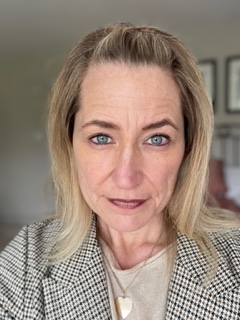
In this series of interviews, I will be talking to memoirists, both published and working towards publication, about their writing process, and how writing memoir has helped them better understand themselves and their place in the world. I am also interested in how a writer navigates difficult territory for themselves and those they love. As well as featuring the interviews here on my blog site, I will be using them as research for my upcoming publication, INTO BEING: The Radical Craft of Memoir and its Power to Transform (published by MUP in 2025).
My 15th interview is with Lorelei Golding whose writing I have been enamoured with for many years. We met on one of my courses some time ago and then I found myself teaching Lorelei on the Bath Spa MA in Creative Writing. Lorelei is one of those students you never forget. She has the perfect combination of an extraordinary life story to tell, and powerful searing prose. I have a lot of confidence in her memoir Birdie, which I have been privileged to read at various stages of development.
Lorelei is originally from New York and majored in English Literature at university as an undergraduate. She earned a Masters of Science in Public Health from the University of the West in 2021, where she focused a particular interest on the impact of childhood trauma across the lifecourse, and more recently completed a Masters of Arts in Creative Writing from Bath Spa University, earning distinctions in both degrees. In 2020 she won Goldsmiths Spread the Word Life Writing Prize which included an Arvon residency and a mentorship with Kerri ni Dochartaigh, and in 2022 she was selected to attend the Bread Loaf Writer’s Conference in Vermont. She is currently working on her memoir and her manuscript in progress, Birdie, has been optioned for film by Once Upon Pictures. She lives in Somerset, England with her family.
How did you land on your idea?
I’ve known for a very long time I was going to write about my childhood. I’ve been keeping a running list of “episodes” from my life that I wanted to examine for probably twenty years; in a journal from my late twenties I had roughly sketched out some of the chapters that are going to appear in the book, so I guess I did not land on the idea, per se, but it’s been simmering on the back burner for a while. It did take me a long time to decide how to frame the story, and that is still something I am in the process of finalising.
Did it feel essential for you to explore this subject? Was it urgent? Persistent?
Yes – absolutely. I’ve been carrying these memories around with me for decades, and they are vivid and powerful and often haunting. It is only now that my children are older that I have the necessary mental capability and space to really think about how adverse experiences have impacted the overall trajectory of my life, and I think it is a fascinating topic in general, for everyone; what makes us who we are, why do we make the choices we make? I’m 53 years old, and it feels like an important thing to try and understand not only about myself, but about others also. I’m always curious about what makes people who they are, why they behave a certain way – which almost always leads to asking questions about someone’s childhood, because the seeds of identity are planted deep and early. I’ve written other essays and short stories and lots of terrible poetry over the years, but this memoir is the story that persisted, the story lurks underneath everything else I have ever written.
What is it about memoir that appeals to you?
Not to be a cliché, but ultimately, I think memoirs are full of hope; a memoir is often the tangible result of someone’s effort to describe how they overcame something, and usually something very painful. I think writing a memoir is an act of artistic generosity too, because of the self-exposure that’s required. But this is what also gives memoir it’s power, and it’s potential to uplift; the story is real and was lived. Someone survived something. I’ve relied heavily on memoirs as tools to navigate my own difficulties, and for me, memoirs that describe a harrowing uprbringing – such as This Boy’s Life or The Glass Castle, two of my favourites – always provided me great comfort that I wasn’t alone. I guess this is an obvious answer and I wish I had a more literary answer, but for me, memoirs are my favourite genre because they are almost always about an overcoming, and I’m a sucker for a story about real, human triumph.
Did your voice come naturally, and your authority as the person telling this story, or was that something you needed to work on – did it come more easily the deeper you went into your research?
The voice of the narrator was very clear from the start of this project. I wrote the first part of the book from the perspective of a nine-year-old girl, but one who is very aware of her surroundings in a hyperattuned way that isn’t normal for a girl that age. I also think tense and voice are very connected, and this story needed to be told in the present tense even though it took place in the past, because it gives the story immediacy, and I wanted the reader to really feel this girl’s vulnerability. But there needed to be an element of distance too, because she is a child and she doesn’t quite understand what is happening to her. So for me I tried to use a voice that conveyed what it felt like to be that nine-year-old girl by describing what she sees and does, because she does not have the adult language to describe how she’s feeling or what is happening to her. But this was only a single chapter, and because this book is also a coming-of-age story, I’ve had to think very carefully about how the “voice” evolves, and it is something I have had to work on. I’ve tried to keep the cadence and the rhythm of the language consistent through the book, but as the narrator moves through childhood and adolescence her awareness of her surroundings increases, so her observations naturally become more sophisticated. It’s quite a tricky thing, to keep the voice consistent, especially when writing in the present tense, because you must try to be true to the voice of each age; what did I feel at nine? At fourteen, when I fell in love? At sixteen, when I ran away? I can “hear” the voice of the narrator clearly in my head, and it takes work to get it right on the page. But this is essentially the problem for all writers, everywhere.
And how did you navigate writing about family members or those who are close to you?
This is a deeply complicated question. I’m still writing the book and my husband and children will all be in it. I am very open with them about what I am writing and why I am writing about them, and that they will have veto power over anything they are uncomfortable with. I absolutely will not write anything about my children that might potentially be damaging to them in any way; they did not ask to be in this book, and their story of how they were raised in our home is theirs, not mine. But I don’t feel that way universally about everyone I’ve written about. As I have been writing, I have had to really examine my motives for characterizing some of the more complex personalities in the way that I have, just to ensure I am presenting people fairly; this has required a lot of therapy, which is NOT the same as writing, something that seems obvious but something I was confused about for a long time. I also took the time to write sections of the book from perspectives other than my own to really try and situate myself in what someone else’s experience might have been, and what their experience of me might have been, and I found this to be an important exercise, and very humbling. I think it is essential to write from a place of honesty, but with empathy and even mercy, especially because humans are complex, and there isn’t a single right version of events. I always say to my children: more than one thing can be true at once, and usually is.
Did you share the text with relevant people before it went to press? Did you give them veto as to what was kept?
Before an excerpt was published, I did notify all the living, relevant people, but I didn’t give them veto power or take advice on suggested edits. I did change some names, and I will be doing that in the book, absolutely. I am also publishing my book under my married name, so it won’t be easy for the average person who doesn’t know me to connect me to other people I am writing about, especially from the past.
I believe that everyone has the right to tell their story, if they choose to do so. I also believe it is my responsibility to protect people as much as I can, but still tell that story as truthfully as I can. There is a lot I have left out that would help explain why I grew up the way I did and how it impacted others, but those aren’t my stories to tell because they did not directly impact me. There are no easy answers here – as a writer, or as a family member, being written about. Obviously, it would be ideal if everyone featured in a memoir was supportive, but this is rarely the case, and is likely not the case for me, so it has required a lot of consideration.
Were there aspects of your story that you resisted, that you thought you could get away with not writing, but then realised it wasn’t possible – and if so, how did you protect yourself, or how did it feel to write those sections?
Oh God yes. I’ve had to include a really violent event that I refused to believe was necessary to the story, and I originally ended the timeline of the book before this event occurs specifically because I did not want to have to write about it. I left it out of the outline of the book for nearly two years. When I realised it was a key event that defined the most important relationship in the book, I wrote it quickly, just to get it out of the way. And it sat there until I was a little more mentally stable to deal with it, and then I talked about this event extensively in therapy. Now I am at a point where I can look at this section and critique the writing, and also accept criticism of the work, which is essential if you want to improve your skills. But it took professional help to get to this point, and many drafts through lots of tears. I let myself cry and feel loss, and allowed myself to really grieve in a way I hadn’t. I think it is important to acknowledge past anguish – I spent so much time repressing it, or hoping it would go away, I never allowed myself to be sad, and I think the only way to write difficult events well is to allow yourself the compassion and empathy you require. I had to do all the emotional work of acceptance before I could focus on the quality of the prose – for me, it was essential, because the writing itself is not therapy. As I mentioned. Only therapy is therapy. And the writing – if done well, with a bit of luck and a lot of work– is art.
Was it a process to become ‘ready’ or ‘prepared’ to go to the places that you might have otherwise resisted? Did you have any rituals to protect yourself?
Initially it wasn’t an issue, but as I began to comb through my memories, I definitely had to figure out a way to “de-role” because I found myself either upset for days on end after writing, or I would simply procrastinate, not wanting to face the emotions again and again. I developed a visualisation technique that I call the diving bell; I literally picture my most compassionate, adult-self going into the safety of a diving bell where I feel protected, where I feel I can observe from a distance, and then lower myself into whatever time period I am writing about. It sounds hokey but it works for me. When I’m writing about something difficult and I stop, I do grounding exercises to help me root myself to the present; what are five things I can see, hear, smell, touch, et cetera. It reminds me I am no longer living in the past, I am no longer that girl, anymore, and helps me get out of difficult mental spaces. I’ve always had a slightly problematic relationship with time, so I find this practice very helpful.
Do you think personal narrative is a platform for exploring the unspeakable? Lifting the veil? Or even the unthinkable? If so, please expand:
This is an interesting question. I think personal narrative is a potent storytelling tool, for exactly the reasons I love memoir; you know it is based on someone’s actual experience, and this carries weight, at least it does for me as a reader, to know someone endured the thing they are writing about. I think where there is real power in personal narrative is when the author explores a different aspect of the unspeakable, and gives the reader pause to consider something from a slightly different perspective which isn’t focused on the spectacle of abuse or violence. Barry Lopez’ Sliver of Sky comes to mind almost immediately; this wasn’t just a narrative about the abuse the author suffered, or how he came to heal – it was an exploration about how that abuse affected his other relationships, and why his mother and stepfather may have made the choices they made, and the confusion it caused him during his life. Lopez gave us another perspective to consider, and opened up a different line of conversation.
But I think all writing – all art, in fact – has the ability to explore the unspeakable. I just think it is a question of preference, and how well it is done. I can think of sculptures that convey a degree of human suffering or defiance or shame that I certainly wouldn’t be able to articulate, or photos that capture a mood that would take pages to describe. I recently saw a short film that contained the most beautiful cinematography and left me broken-hearted that had maybe a hundred words of dialogue. The last scene of the film Past Lives where the two main characters stand there looking at each other was unforgettable specifically because they were silent, because of the absence of words. So I think all art has the potential to convey a sense of the unspeakable, if it is done well. Personal narrative is just one way to do it.
How is memoir different from lived experience?
I think memoir extracts a story from a larger and infinitely more complicated lived experience and tries to make sense of it in some way. It is a slice of a life examined through a particular lens, whereas lived experience contains all the emotions felt, every event that transpired, and all of the people and complexities of everyday existence. I think the job of memoir is to distil that experience to its essential parts to serve the story, and as a writer I have been ruthless about what to include to that end. Not everything is relevant, so memoir is also about what is left out, too; you leave parts out because they are boring, or they don’t really matter, or they don’t serve a narrative function. I had written a long sequence about something cruel my father did – and it happened, and it was awful – but I took it out, because it didn’t give the reader any new information. By this point in the story we know he is cruel, and it just felt redundant to include it. A memoir is crafted with specificity and skill and is honed to within an inch of its life, but lived experience just happens and is a borderless mess of complication and confusion.
Do you journal and if so, how did that help when it came to writing your memoir?
I do journal, and it has been extremely helpful: I thank past Me a lot for having the foresight to write everything down. I definitely could not have written much of the present day timeline if I hadn’t kept journals over the last two decades. I even have journals I kept when I was fifteen, which was an incredibly useful document to have when I wrote about that time in my life – it was interesting to note what took up space on the page and what was barely mentioned, and why that might have been.
Does writing memoir offer cohesion to otherwise fractured memories and experience, and is that cohesion empowering? If so, expand on why?
For me, writing the memoir has offered a useful and hopeful way to interpret the events of my life. In my case, I think the scientific research I discovered about the impact of childhood trauma – which was the original Adverse Childhood Experiences study published in 1998 by Dr. Vince Felittii and Dr. Robert Anda – was instrumental, and helped me understand what happened to me, and why mind kept going to dark places long after terrible events stopped happening. That study was life-changing for me and gave me a self-awareness I had been lacking. I had this internalised belief that there was something wrong with me, and I had been carrying around this narrative of myself as “defective” for as long as I can remember, and I just assumed it was true. But the data in that study proved otherwise and made me start questioning whether the story I was telling myself about myself was correct. Writing the memoir helped me interrogate that narrative, and ultimately, work to dismantle it entirely. So in my case it was the combination of the research and the act of writing the memoir that felt empowering.
And did memories lead to memories that had been buried?
Yes, but less often than I thought. I was actually terrified of uncovering more difficult memories, but that didn’t happen. I mostly remembered people I had forgotten, or details about the way something looked. In one part of the book I describe a house I lived in, and while I was writing I remembered it had a dumpster (it’s called a skip in the UK) in the driveway, and I remembered having to walk past this huge pile of garbage. When I went back to have a look around all the old houses where my family used to live, I was shocked to see it was still there, in the same place, still full of garbage. It gave me confidence in my recollections, although obviously we can never be sure if what we are remembering is 100% right.
When we write memoir, we make something that is otherwise in flux concrete – this can be good and bad, good in that you might become a master of your story, and bad perhaps in that it sets it in stone and it becomes a reality, rather than something that was fleeting or forgotten. What are your views on this?
As the context for this question so aptly posits – it’s a mixed blessing, for sure. I’ve heard of authors who are thrilled to get their lives on the page and into a book, a rectangular box in which they can pour their demons from the past and store on a shelf. And maybe I will feel that way too, once the book is finished and published and out in the world, doing whatever it will do. But for me, my memories and the past weren’t really in a state of flux, or fleeting, and definitely were not forgotten; they felt constantly present and real. I’m not sure writing it all down and “setting it in stone” makes it more of a reality than actually living through it. I guess because a book is a tangible object, it makes the past harder to ignore if you write it all down. But I was already struggling to ignore all the voices from my past, and this was a way to lay them to rest, so I could turn to the rest of my life with less shame and more hope and joy.
I think it is more important to remember that a memoir is a version of your story that you are presenting to the world – a memoir never tells the entire story, and isn’t meant to, either. When I read parts of my work to my family or friends, I can often see that they are saddened by what I’ve written, and what I’ve gone through. I remind them that I can write about darker parts of my life precisely because it is only one part of my story, and that the darkness doesn’t feel like the only story, anymore. My memoir is full of my memories, yes; but my memoir will never be the whole of me, or the whole of my life.
What a wonderful set of insights Lorelei has brought to this topic of writing about childhood trauma. I related to so much of what she said re my own process of writing my memoir. I love in particular the way she describes memoir as an ‘act of artistic generosity’ and how memoir is implicitly hopeful, because they are about overcoming, and are based on a real life. Also how writing is NOT therapy, but art. Her explanation to her family of why she can write about it is exactly how I feel too. I can’t wait to read Birdie when it is published!
Thank you Siobhan! All agreed.