
I have learned a lot about memoir this week, from various conversations had, and books read, and certain angles not before thought about. This is no surprise as I seem to be immersed in the world of personal narrative these days: through teaching, mentoring, and now also having written a proposal for a potential book on the craft of memoir. But I’ve also just finished reading something that has had me turn the corners of many of its pages, and even transcribe whole paragraphs, both by hand and reading aloud to my partner. The Friend by Sigrid Nunez isn’t a memoir, but a novel about the problematic nature of writing nonfiction. It meditates on what it is to be a writer and what it is to write someone else’s life.
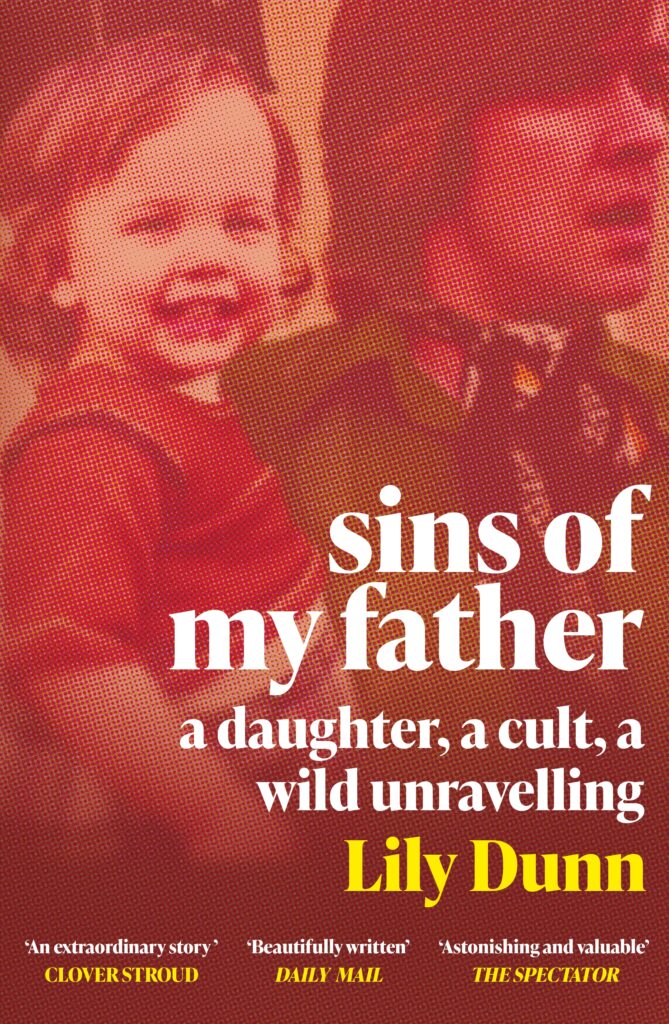
I am particularly interested in this question having written a memoir about my father, Sins of My Father, which incidentally is published today in paperback (2nd March), and the ethical questions and challenges around this decision to write about his life. My father had died by the time I wrote the book, which throws up additional questions about whether I had a right to write about him when he was not alive to defend himself. My word became the last word in many ways, a huge responsibility to have created such a significant record of him and published it for all to read. Even though it is written from my point of view, it becomes part of his reality. This aspect of his life becomes set in ink. I justified this because of the nature of my relationship with my father in which I had felt subjugated, in the shadow of his narcissism; his need to be my superman, my god, a bullshit spouting guru, in many ways smothered my needs and my voice. And by writing my story I took an opportunity to finally stand up and project myself, while exploring the effects of being a daughter of such a damaged and charismatic man. This, I hope, will also be a voice for others who have experienced the fallout of a neglectful and selfish parent.
Towards the end of The Friend, the narrator has a fictional conversation with a man she loves, and asks how does a writer write about others? Do they bear witness by capturing the stories that might otherwise be lost, or should a writer – because they must be privileged in the first place to be living this life – be focused more on how to get themselves out of the way? Should writers be creating a platform for other people’s stories, which might not otherwise be told, and steer away from invention and using the authorial point of view? This feels like an important question to Nunez’s characters in light of the argument that writers are innately egotistical, despite claiming to write about others in order to better understand themselves or present a new reality to the world, coldblooded even, and ultimately writing in order to promote themselves and their career.
There is a particular book out there, much like documentary, which can act as a platform for the voices to speak for themselves – the author Nunez cites Nobel prize winner, Svetlana Alexievich (whose Chernobyl Prayer is excellent) – whose intention is to capture the lives of victims, who might otherwise be lost to history, as a kind of documentary fiction, ‘stories cut from individual ordinary lives. No invention. No authorial point of view.’ A polyphonic chorus speaking loud, clear and unhindered by narrative construction or opinion. I attempted to do something similar, with co-editor Zoe Gilbert, with A Wild and Precious Life, which was an anthology of stories about trauma and addiction (published by Unbound, 2021). But what sets memoir apart, I believe, is its relational aspect, that it is not so much about the life, but an aspect of the life, and the relationships in that life – mostly the relationship the author has with the characters they are writing about. If the focus is on one specific person, as is the case with my memoir, it is about how that person affected the author. The relationship takes precedence over the individual life, and therefore the authorial point of view becomes paramount. This does not mean the writer has total freedom in how they represent that other life – there are still numerous important questions that need to be asked along the way, about story, technique and ethics – but inevitably with memoir the writer steps into the stage light. The story is hers, and everything the reader reads has moved through the prism of the writer’s experience.
Another question came up this week, and it was – can one write memoir and be a good person? Put another way: do you need to be ruthless to write memoir? There is that famous Graham Greene quote: ‘there is a splinter of ice in the heart of a writer.’ How far are we prepared to go to expose others to capture the drama, and is there a way of doing this and remaining honourable? I am not sure I have the answer to this question, but I do think there is much skill in writing about others with humility and compassion. That there are ways of doing it sensitively and still having an impact. That often it’s not the action that is important, it’s the themes that run in the strata beneath, and it takes courage, dedication and wisdom, and a preparedness, I suppose, to go to those difficult places, in order to transcend what stands before you and touch on its meaning, to unearth what has remained unsaid. The writing and the memoir then at best become a gift of understanding. There is a wonderful Vivian Gornick quote that follows me around, always bobbing up in these moments when I am trying to articulate myself and I am going to have to put down the laptop now to try to find it…
‘I began to see that in the course of daily life when, by my own lights, I act badly – confrontational, challenging, dismissive – I am out there on that raft before I have found the narrator who can bring under control the onslaught of my own internal flux. When I am doing better, I am able to see that the flux is a situation. I stop churning around inside my own defensiveness; adopt a tone, a syntax, a perspective not wholly mine that allows me to focus on… what? the husband? the guides? the illegals? No matter. Any one of them will do. I become interested in my own existence only as a means of penetrating the situation in hand. I have created a persona who can find the story riding the tide that I, in my unmediated state, am otherwise going to drown in.’
I love this quote. That we are not writing testimony – simply capturing the facts of what happened – we are digging deeper than that. That we are ultimately creating story, and in doing so making similar decisions to a writer of fiction. That it’s the meaning beneath the events that matter. At its best, a good memoir, one which finds meaning in difficult experience, speaks to everyone it touches, and its strength is in its voice, the guiding hand of the narrator.
Interesting exploration of the ethics of memoir – a topic that exercises me too.
Thank you!