
In this series of interviews, I will be talking to memoirists, both published and working towards publication, about their writing process, and how writing memoir has helped them better understand themselves and their place in the world. I am also interested in how a writer navigates difficult territory for themselves and those they love. As well as featuring the interviews here on my blog site, I will be using them as research for my upcoming publication, INTO BEING: The Radical Craft of Memoir and its Power to Transform (published by MUP in 2025).
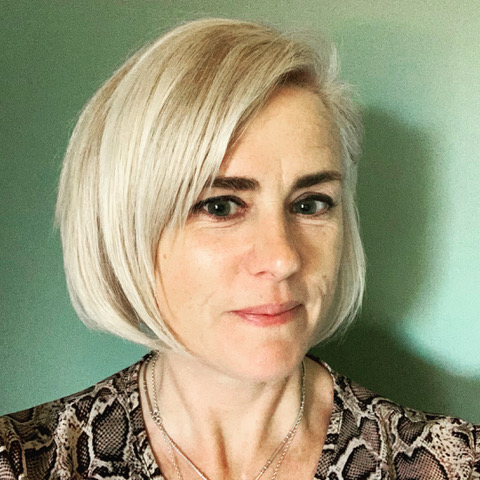
My ninth interview is with Anna Wilson whose memoir A Place for Everything is a powerful and moving account of her relationship with her mother in light of her late diagnosis of autism. It has a fierce and immediate energy that brings you right into the emotion of dealing with a parent’s deterioration, and one of the most honest accounts I’ve read of the frustration around dealing with a parent’s care.
Anna Wilson began her career as a picture book editor at Macmillan Children’s Books, but quickly turned her attention to writing her own books and has published over 50 books. Her children’s series, Vlad the World’s Worst Vampire has been translated into thirteen languages. Her latest picture book Grandpa and the Kingfisher was shortlisted for the Wainwright Nature Prize in 2023. As well as writing for young people, Anna has also published a memoir: A Place for Everything – my mother, autism and me. It has been reviewed as “a seminal work in this area” by the world expert in autism in women, Professor Tony Attwood. Anna also has extensive experience in teaching creative writing. She was an Associate Lecturer at Bath Spa University and is currently a tutor for the Arvon Foundation and the HarperCollins Author Academy. She is also a Royal Literary Fund Fellow.
When and how did you realise you had to write A Place for Everything?
It is always difficult to pinpoint the exact moment when I decide a book has to be written, whether it’s a memoir, a blog post or a children’s book. Ideas start to come at me from all directions, some of them quietly, some more insistently. Usually then a fizzing feeling starts up in my body accompanied by an urgency to nail those ideas to the page. A Place for Everything started in my journals – a messy, raw outpouring of anger at the situation my parents and I found ourselves in, with my father’s cancer left undiagnosed for over a year and my mother’s mental health spiralling for over a decade. During the most acute times I did what I have always done and scribbled it down, unedited and un-crafted, for no one’s eyes but my own. Once Dad had died, the urge to write all this out – to put it out into the world – became stronger. I sat down to start my blog, Good Grief, on the anniversary of the day Dad told me he had only three months left to live. The reaction to the blog from friends and relatives was intense with more than one person almost pleading with me to turn the blog into a book. I don’t think I would have had the confidence to make this a reality had I not had readers already – many of them writers I respected hugely. So I suppose in the end I realised I had no choice but to wrestle my unwieldy blog posts and journals into a narrative arc.
Did it start with an image, or an emotion, or first line, or an idea – or none of the above?
In terms of finding the narrative arc, finding the start of my memoir took a lot of work. Where on earth do you start when telling the story of a life? With backstory? With scene setting? With a date of birth and from there onwards? I tried all these and they fell very flat. In the end I kept coming back to the day when I felt the most unhinged by our situation – a day well into the nightmare of trying to care for a dying father and a mentally ill mother when I was doing something as mundane as a supermarket shop. The banality of the surroundings and the monotonous, boring way those around me were continuing with their day, set against the hysteria and panic that informed mine, seemed as good a way as any to draw a reader into my world. It was, in creative writing terms, the ‘inciting incident’ for the story that followed.
Did it feel essential that you do it? Was the need urgent? Persistent?
The need to write the blog very quickly did become urgent, yes. Once I was writing the book, it took over everything – I could not write funny books for children any more, that was clear. And the writing came from a physical urge as well as a mental one. The urgency came from external forces as well, as so many people pressed me to persevere, telling me that they had been through similar experiences, be it grief and loss or anger at our health system, or feelings of intense aloneness in their distress.
What is it about memoir that appeals to you?
The way in which the personal becomes universal. When I read excellent memoir, it doesn’t matter about the differences between me and the writer – Alexandra Fuller’s memoir Don’t Let’s Go to the Dogs Tonight tells of her childhood in 1970s’ Rhodesia and could not be further from the day-to-day of my own in 1970s’ Kent, but her relationships with her parents and siblings, her fears, hopes and the things that made her laugh resonate just as powerfully with me as though we were best friends from school. I think all good memoir does this; it connects us, just as excellent fiction can do.
Did your narrative voice come naturally, and your authority as the person telling this story, or was that something you needed to work on – did it come more easily the deeper you went into writing the book and your research?
When I wrote the blog it came very naturally as I didn’t think about it. It was just me, out there on the internet, floating about. When I came to craft it more and to think of it is a potential book then, yes, it was harder as I think I was trying too hard. The early drafts have awful expositional opening chapters full of musings that no reader would ever want to read!
And how did you navigate writing about family members or those who are close to you?
My husband, uncle and sister had already read the blog and were among those who encouraged me to write the memoir. When it came to approaching agents with a final manuscript, I made sure that they read the draft and let me know of anything they were unsure about before I pressed send. We had a little bit of back and forth on specifics, but they were completely supportive. My parents were both dead by this point, so there were no worries on that score. I doubt in fact if I could have written the book, had one or other of them still been alive.
Did you share the text with relevant people before it went to press? Did you give them veto as to what was kept?
I did give them veto, but I think only because I was fairly confident that they would not veto anything important, as they had already read those bits in blog form.
Were there aspects of your story that you resisted, that you thought you could get away with not writing, but then realised it wasn’t possible – and if so, how did you protect yourself, or how did it feel to write those sections?
Yes! In particular a chapter which I thought I had got away with condensing into a few lines which my editor jumped on immediately and gently teased out of me in its entirety. I had glossed over an incident which was probably the most frightening of my childhood – a day when my mother had beaten me so hard for spilling ink on the carpet that she had left large dark bruises on me which took weeks to fade. My editor suggested that this was a key scene and not something that could be dealt with lightly. I protested and said, “Oh, it was just one of those things – over the years we joked about it dismissively as a family.” I will never forget the quiet, wide-eyed response I received. I was cajoled into writing the whole scene out, but my editor suggested it might be a good idea to write it in a child’s voice – playing on my strengths as a published children’s writer. I went on to write a few scenes in this way. It was easier somehow to go back to how it was at the time, rather than reflect on it as an adult. Don’t get me wrong, it was incredibly hard to do and I needed a lot of time and space around writing that scene. Luckily I had talked to an excellent therapist about this event in detail already and that helped enormously in terms of looking after myself.
Was it a process to become ‘ready’ or ‘prepared’ to go to the places that you might have otherwise resisted?
I suppose I was as ready as I would ever be, having had therapy before starting to write the book. I was able to distance myself a little while crafting the event into a written scene. I could put my ‘children’s author’ hat on and pretend I was telling it as a story. (I had in fact already unwittingly written about my relationship with my mother in more than one of my children’s books which my therapist suggested might also have been a copying mechanism. I realised I had also put my therapist into one of them, which we both laughed about.) I found the whole process of editing and rewriting the memoir had this distancing element to it, helped by the fact that my editor kept referring to members of my family as ‘characters’, something I baulked at at first, but which was actually very useful as it kept bringing me back to the importance of storytelling,
Did you have any rituals to protect yourself?
Getting outside. Swimming in cold water to get myself back into my body. I ran a lot at that time of my life as well. Sometimes I look back and wonder if in some ways I was trying to run away. Talking to trusted friends.
Do you think personal narrative is a platform for exploring the unspeakable? Or even the unthinkable? If so, please expand:
Yes, as long as it doesn’t descend into a catalogue of misery. I return to what I said about the personal becoming universal. I don’t think a memoir should be a platform solely to shock, to encourage rubber-necking. I think even the most horrific experiences (see Patrick Melrose’s in his St Aubyn trilogy) need to bring the reader into the room in a way that provokes empathy and understanding, otherwise it is just horror writing. I don’t necessarily think any topic should be off-limits as everything is part of the human experience. The one thing I am squeamish about is writers mining their children’s lives because of the effects this can have on those vulnerable individuals later in life. But I know not everyone agrees with me on this.
How is memoir different from lived experience?
I think it’s all in that distance I have explained above. You are able to be your own viewer – your own reader. It gives you a chance to reflect, even if you don’t want the final work to read as a reflective piece. For me it was all about story and so, in the end, was not so vastly different from writing a novel. I often think about this when asked to talk about the book or read sections of it aloud. I can only do it if I feel a level of detachment, otherwise I am right back there in the pain and mess and grief and it’s too overwhelming to deal with.
Do you write a journal and if so, how did that help when it came to writing your memoir?
I have written a journal since I was 7 and will continue to do so for as long as I can hold a pencil. It is the best way I have found of working out how I feel and it gets my feelings out of me in a way that is manageable. I could not have written the memoir without journaling first. It would have been an almighty tangle and I would have forgotten huge chunks of the things I had noted in the journal when I was feeling most raw.
Does writing memoir offer cohesion to otherwise fractured memories and experience, and is that cohesion empowering? If so, expand on why?
I think it does offer cohesion, yes – in the same way that structuring a novel imposes order on chaos so that a reader can follow the story, a memoir is first and foremost a way of imposing order on chaos for the writer who has lived the experience, and then does the same for a reader who steps into their shoes.
And did your recalling of memories lead to more memories that had been buried?
Not really. It did open up conversations with my sister which showed me that, even though she is younger than me, she had witnessed things and experienced things of which I had been unaware in early childhood. But not much of that went into the book as those events are her story, not mine.
Do you think memoir has the power to change lives, both that of the writer and that of the reader?
I think it has the power to change perspective, I’m not sure I’d go so far as to say it changes lives. My book changed the perspective of many family friends who had not understood how difficult it could be being brought up by a woman with undiagnosed autism. It opened up some wonderful conversations and some not so wonderful ones as well! In general I think those who have read it have found it helpful and I have had readers (some known to me, some not) who have told me it has helped them to understand themselves or their mothers or children better and that they felt seen while reading it. These conversations and emails are always very moving, as I wrote the book for purely selfish reasons – wanting to be seen and understood myself.
How has writing A Place for Everything changed your life?
On an emotional level it has enabled me to talk openly about Mum in a more loving and understanding way. It has opened up relationships with others who have told me they benefited from reading it (as above). It made my relationship with my sister a little tricky once the book was out as she panicked thinking it was going to be a bestseller and that she would see it ‘in all the bookshops’! Even when I assured her this was very unlikely, she did retreat a little from our relationship for a while which I found very hard. I had to take time to realise it was her story too and that it was one thing to encourage me to write it, quite another to admit the reality of it being a book that strangers would read. We have moved on from that now, but it was a painful time. On a professional level it has made a difference as I am now not ‘only a children’s author’ (according to some) and I have been able to expand my teaching career as a result and also find an agent to represent my adult writing, which is a wonderful thing.
When we write memoir, we make something that is otherwise in flux concrete – this can be good and bad, good in that you might become a master of your story, and bad perhaps in that it sets it in stone and it becomes a reality, rather than something that was fleeting or forgotten. What are your views on this?
It is a funny thing that I only considered this after the book was in my hands and I was reading from it at an event. I had a sudden realisation that I had changed and grown since experiencing the events in the memoir and that I was no longer the same person as the narrator of the book. If I wrote it now, it would be very different in tone and I might even leave out some of the passages in the book. But then perhaps it would not be as good. A Place for Everything represents a moment in time because of the emotions involved and also my perspective on the events at the time of writing. I have read a lot more about autism since writing the book (and I had already read an awful lot at that point!). I am also almost ten years older than I was when writing the early drafts, and I myself am going through some of the things which precipitated some of my mother’s anxiety in middle age, including menopause. These things mean that I have a different perspective on my mother and on my own reactions and behaviour towards her when she was alive. I have regrets around my lack of understanding, however, my memoir is merely a snapshot of one chapter of my life, and as such I don’t feel as though I am a master of my story: my story is changing and will go on changing until the day I die.
This memoir sounds fascinating. I grew up with an undiagnosed autistic mother, too, though we oonly realised this after I was diagnosed at 37! It’s very difficult to gain crucial understanding so late in life, and I have regrets over not understanding my father (also very likely autistic) better before he died. I look forward to reading this!