
This is an updated version of a blog post I published on the London Lit Lab website a year ago.
Memoir is a bit of an anomaly in the publishing world, because it is categorised as nonfiction, but many memoirs are written like novels, concerned with character, suspense, action and a narrative arc, and can be equally enigmatic. But when a writer comes to sell a memoir to a publisher, she will often sell it on proposal only. This is an approximate 50-page document, which will capture the idea – or concept, the central themes of the memoir, place it in its marketplace, demonstrate why this writer needs to be the person to write this book, with generally three sample chapters to show that this writer can write, and hopefully write well. This process relies very much on the narrative being concept-driven, with themes strong enough to ping off the page. Something that an editor can see having universal appeal. In other words, not just the story of somebody’s life.
A novel, on the other hand, is often sold on its entire manuscript and an accompanying one- or two-page synopsis. The novel idea does not only have to be reduced to a USP, as the writer has a chance to win over the editor with her storytelling. When a memoir is sold on proposal, the proposal needs to do a lot of the heavy lifting.
But memoir is not straight nonfiction. Yes, it’s based on a person’s life, and deals with fact, and the exploration of truth, those events that actually happened. But it is also incredibly personal, probing and difficult to write – and the process itself often dictates the end result. In other words, it is quite difficult to know what you are going to write about until you have written at least a first draft. There is a process in memoir, I find, that demands you as writer have a certain level of self-awareness, that you can stand apart from your experience and see its greater power – its ability to touch people’s lives. This, for many, does not come immediately.
That’s unless you have a strong cracking concept-led idea that stands apart from anything else that has ever been written before. I can think of a few books I’ve read recently, or am currently reading: Amy Key’s Arrangements in Blue, which uses Joni Mitchell’s iconic album, Blue as the framework to explore the single person’s life, and her longing for romantic love – and how in absence of that love one finds happiness and companionship (published last week); or about to be published (this coming week) A Little Give, by Marina Benjamin, which highlights the invisible (often women’s) tasks of domestic labour – cleaning, caring, feeding – as those subjects worth exploring, beyond the author’s personal reckoning with these responsibilities in her own life. But did Key and Benjamin wake up with these genius theme-led ideas intact, ready to fall onto the page, and Hey Presto! – they had their commission? I imagine it’s more likely they had something close to this idea – they might have explored it through essays perhaps, testing their readership – developed enough for an editor to see potential. More often than not, a book comes into being through the writing process itself.
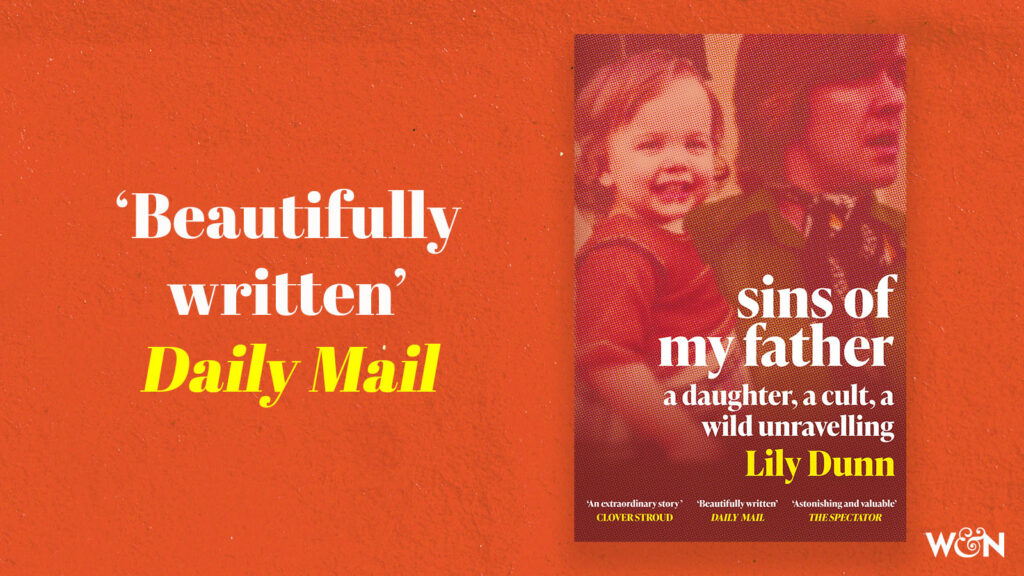
Last year, I sold my memoir on proposal, but I had already written the entire book, about three times in fact. Sins of My Father, a daughter, a cult, a wild unravelling, had been living with me for quite a few years and because of the personal nature of the content – about my enduring love for a very damaged and self-centred, narcissistic father – I could not imagine selling it on its idea alone. I had to write it and live with it and give myself up to the transformative power of that journey. In the end the long process of the book’s evolution changed me and my perspective on my relationship with my father, which in turn became crucial to the story.
As a novelist, I didn’t realise I had to write a proposal until I found myself for the first time in my literary career without an agent (my previous agent didn’t believe in this book, and we decided to part ways). But with the help of a brilliant mentor, I wrote my proposal and in the process it helped me better distil the themes in my book. When I caught the attention of Cathryn Summerhayes at Curtis Brown, who was very excited to represent me, I felt the proposal must be working! Cathryn suggested we sell it on proposal, despite the book being written, because this is what tends to be expected by nonfiction editors. In the first week of submission, the excellent editor and publisher at Weidenfeld & Nicolson, Jenny Lord, got in touch to meet with me. I was thrilled to hear the ideas that the proposal had inspired in her, and so our collaborative relationship began.
So, I suppose I’m coming round to saying that even though memoir is closely aligned with the novel, and like writing a novel it involves a lot of private and painstaking reckoning with oneself and the writing process in order to find the story, I also found the process of writing a proposal crucial. It helped me take that final leap away from my experience and see it as something separate. Battling with the challenge of distilling a life down to a few concepts, a few sentences even, really helped me imagine my story, my book in telling that story, on a bookshelf, and in this imagining, it helped me take the whole project more seriously. I stepped up, and I thought about the way this memoir might help other people’s lives, as it had helped mine.
I will be discussing more of this on my How to Write a Compelling Memoir Proposal online course starting in May. There are a few places left if you’d like to join us.
Sins of My Father, A Daughter, A Cult, A Wild Unravelling is now out in paperback, and you can buy it in all good bookshops, or here:
HI Lily,
I found your article very interesting.
I am writing a memoir based on my doctor father’s war experiences. When I started writing I wasn’t sure what I was writing. I simply began writing the defining moments of my life as I remembered them as short episodes or stories. I also began writing fictional stories related to my father’s capture and captivity alongside my research in my history. I have done several online courses during Covid with Curtis Brown, Arvon and The National Centre for Writing. Writing the synopsis of my story for a Curtis Brown ‘how to write fiction course’ was particularly challenging but what I really need to write now is a proposal.
Would you have a space on your online course next month as I’d like to join it if possible?
Hi Susan, I am so sorry, I only just saw this message. Unfortunately the course is fully sold out. But do keep in touch as we will most likely run it again. Your project sounds really interesting.